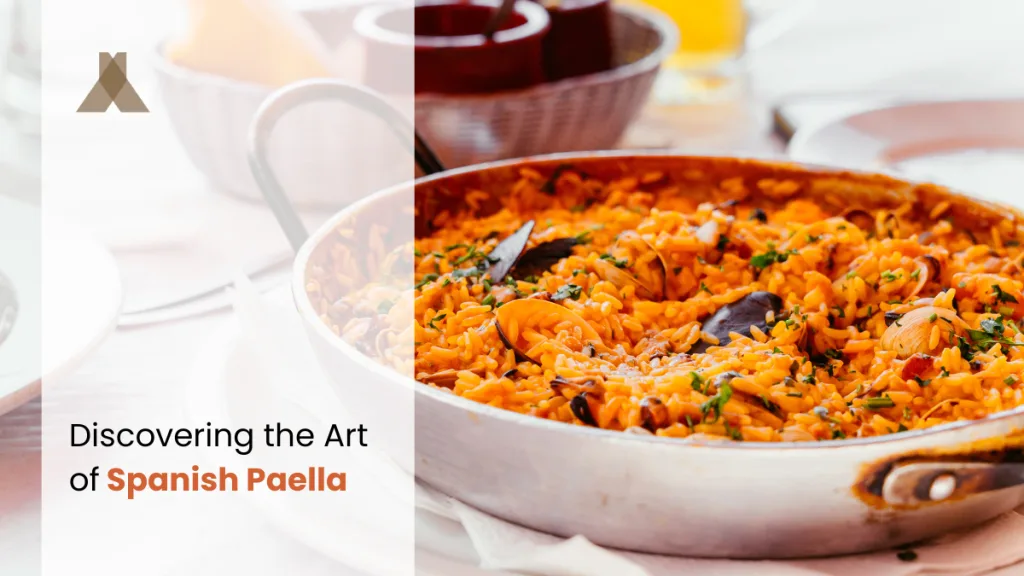
If we say “paella”, your mind probably answers “Spain!”.
Spanish paella is an exquisite dish originating in the Valencia region, which, in fact, has it as one of its identifying symbols. It’s characterized by the use of short-grain rice cooked in a pan called “paellera”, typically featuring meats (chicken and rabbit), seafood (like prawns and mussels), or vegetables, all infused with saffron.
The name “paella”, a Catalan word derived from the Latin “patella”, comes from the round, shallow pan with two handles where the dish is cooked. This pan is essential for achieving the dish’s characteristic “socarrat”(the crispy bottom layer of rice).
The world of paella is rich and varied. Let’s discover its history, features, types, and curiosities!
The History of Spanish Paella
Paella originates from the Valencia region of Spain, where it’s considered one of the defining symbols of local cuisine. It was developed in the rural areas near Albufera, where farmers cooked rice in a wide, shallow pan over an open fire, adding whatever ingredients were available such as rabbit, chicken, beans, snails, and local vegetables—What we now call paella Valenciana.
In the 19th century, paella transitioned from a rural farmers’ dish to one enjoyed by Spain’s urban elite. It gained international fame when it was served at exhibitions and cultural fairs and, today, paella is synonymous with Spanish cuisine.
However, despite its global popularity, authentic paella remains deeply tied to Valencian culture. In fact, in 2015, Paella Valenciana was officially protected as part of Valencia’s cultural heritage.
Key Features of Spanish Paella
Base Ingredients
- Definitely, the first ingredient we have to mention is rice. Short-grain varieties like Bomba are essential because they absorb liquid without becoming mushy.
- A flavorful base of finely chopped tomatoes, onions, garlic, and sometimes bell peppers, cooked in olive oil. This is called “sofrito”.
- Saffron is another of the most iconic ingredients of Spanish paella—Adds a golden hue and distinct aroma to the dish.
- Rabbit and chicken (in the traditional paella Valenciana and the mixed paella version), and/or seafood (in the seafood paella and the mixed paella version).
Cooking Method
The rice and other ingredients are cooked in a broth, often made with chicken, seafood, or vegetable stock.
As we mentioned before, paella is always cooked in the paellera. This pan is key for achieving the characteristic texture and socarrat of the dish. The socarrat is a prized layer of crispy, caramelized rice at the bottom of the pan, achieved by not stirring the rice as it cooks.
The dish is traditionally cooked over an open flame, but nowadays stovetop and oven methods are also popular.
How Many Types of Paella Are There?
Since this dish is very adaptable to local ingredients and preferences, there are countless variations of paella. However, most types fall into a few main categories based on traditional recipes and regional influences:
Paella Valenciana (Valencian Paella)
This is considered the original and classic Spanish paella, originating from Valencia.
The key ingredients are rabbit, chicken, tomato, short-grain rice, garlic, saffron, green beans, and lima beans (known as “garrofó” in Spanish). In some variations, additional ingredients such as snails and artichokes may also be included.
Paella Valenciana has a characteristic yellow color due to saffron. The traditional preparation involves sautéing the meats and vegetables before adding the rice and broth, allowing the flavors to meld. Of course, the dish is cooked in a “paellera” (the wide, shallow pan), which is essential for achieving the desired texture and socarrat.
Paella de Mariscos (Seafood Paella)
Paella de mariscos, also known as paella marinera, is a beloved type as well.
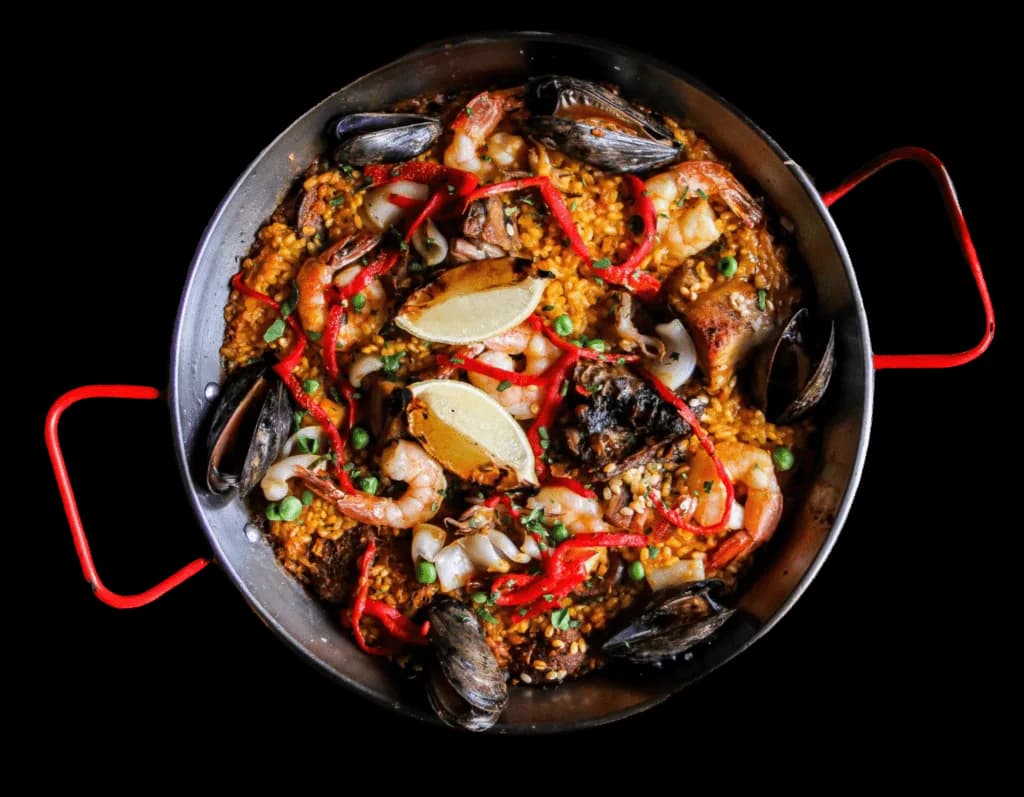
But, unlike paella Valenciana, paella de mariscos primarily features fresh seafood, skipping meat and beans. The most common ingredients are prawns, mussels, clams, and calamari.
This dish is one of the best representations of Mediterranean cuisine, hugely popular in coastal regions where it offers an exquisite taste of the sea.
The cooking process generally involves sautéing the seafood along with vegetables and then adding rice and broth.
Paella Mixta (Mixed Paella)
Paella mixta is a delicious fusion of meat and seafood.
Generally, ingredients can include chicken and/or rabbit; prawns, mussels, and clams; vegetables like bell peppers and peas; and saffron-infused short-grain rice.
This type of paella is one of the most popular outside Spain, as it combines the best of Spanish paella, appealing to both meat and seafood lovers.
The preparation involves sautéing the meats and seafood separately before combining them with the rice and broth.
Arroz Negro (Black Paella)
Also known as “paella negra”, this striking type of paella is characterized by its deep black color, which comes from squid or octopus ink.
Although the ingredients of arroz negro are often similar to those in seafood paella, the ink provides the dish with a different, stronger flavor (and appearance!).
The preparation involves sautéing the seafood and creating a sofrito (base of sautéed onions, garlic, and tomatoes) before adding the rice and squid ink mixed with fish stock. The dish is simmered until the rice absorbs the flavors and achieves a perfect texture.
Paella de Verduras (Vegetarian Paella)
Since nowadays there are more and more people who follow a vegetarian diet, some Spanish restaurants have come up with a paella version without meat or seafood.
The basic ingredients of vegetarian paella are artichokes, asparagus, green beans, mushrooms, and olives. Other frequently used ingredients can include bell peppers, tomatoes, garlic, saffron-infused rice (often Bomba rice), and vegetable broth (as the cooking liquid).
The preparation typically involves sautéing the vegetables in olive oil, followed by adding the rice and broth. The dish is cooked until the rice absorbs the liquid and develops a socarrat.
Did You Know?
Paella has its own official emoji! It was approved in 2016 with the name “Shallow Pan of Food”:
🥘
Android and Apple’s first versions depicted paella de mariscos, but then was changed to be more representative of the traditional ingredients from Valencia.
The emoji varies among the different platforms but it generally features saffron-colored rice, vegetables, and meat on a flat, shallow pan with side handles.
Paella: A Symbol of Spanish Culture
Without a doubt, paella is one of the most iconic dishes in Spanish cuisine, traditionally enjoyed at family celebrations, festivals, and Sunday gatherings.
As we’ve explored here, there are many delicious variations to suit every taste and preference. So, don’t miss our exquisite paellas at Eclipse di Luna—whether you prefer meat, seafood, or veggie options, we have the perfect dish for you! Remember that “Barriga llena, corazón contento!” (Full belly, happy heart!).