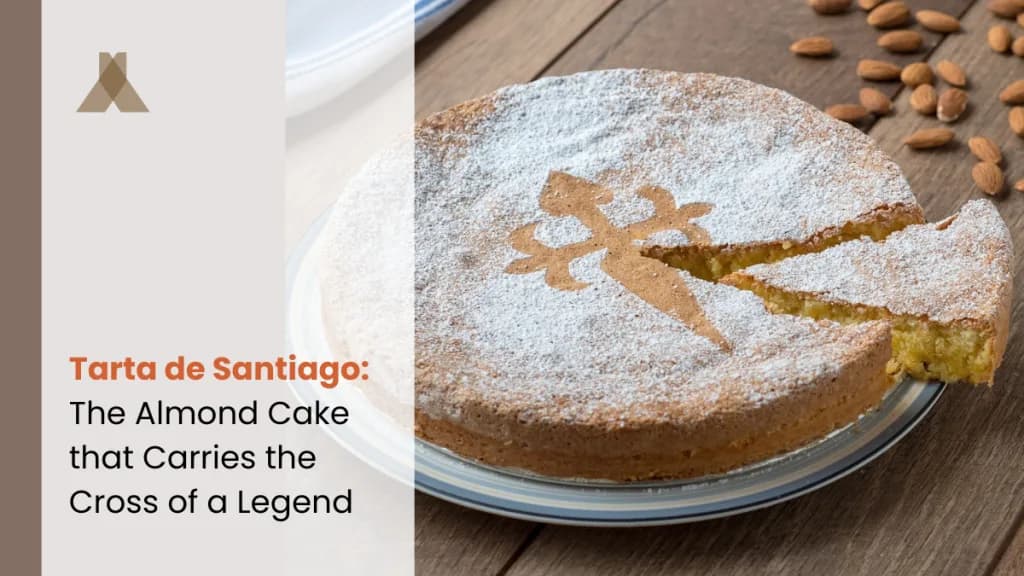
There are countless cakes with beautiful designs, but none are as distinctive and unique as Tarta de Santiago, a cake marked by the iconic Cross of a Saint.
Tarta de Santiago (meaning “cake of St. James”) is a traditional Spanish dessert originating from the region of Galicia. It’s named after Santiago de Compostela, the capital of Galicia, which in turn honors Saint James (Santiago in Spanish), the patron saint of Spain.
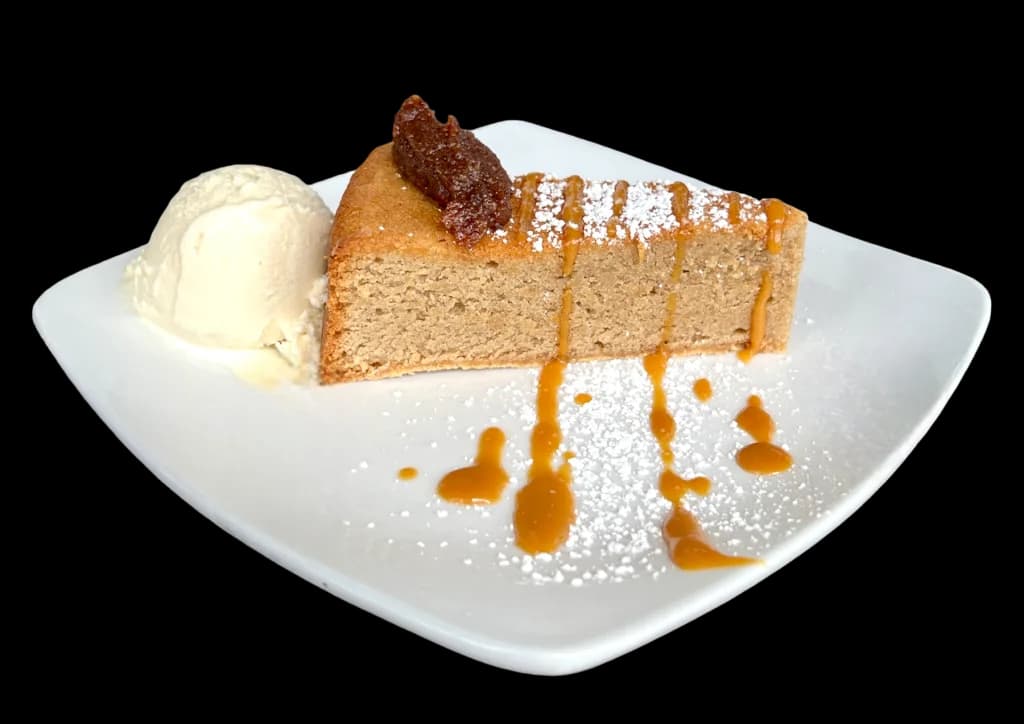
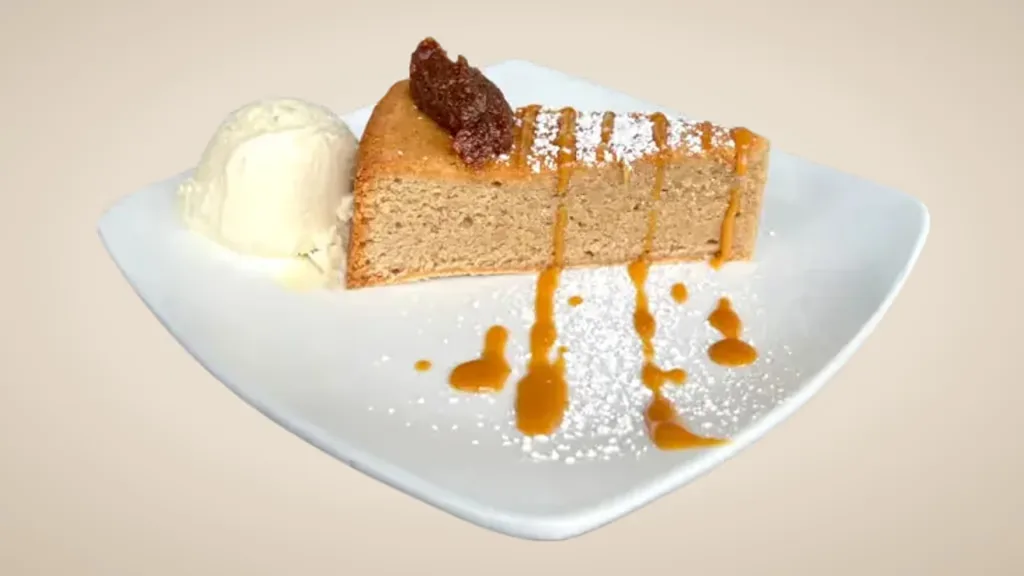
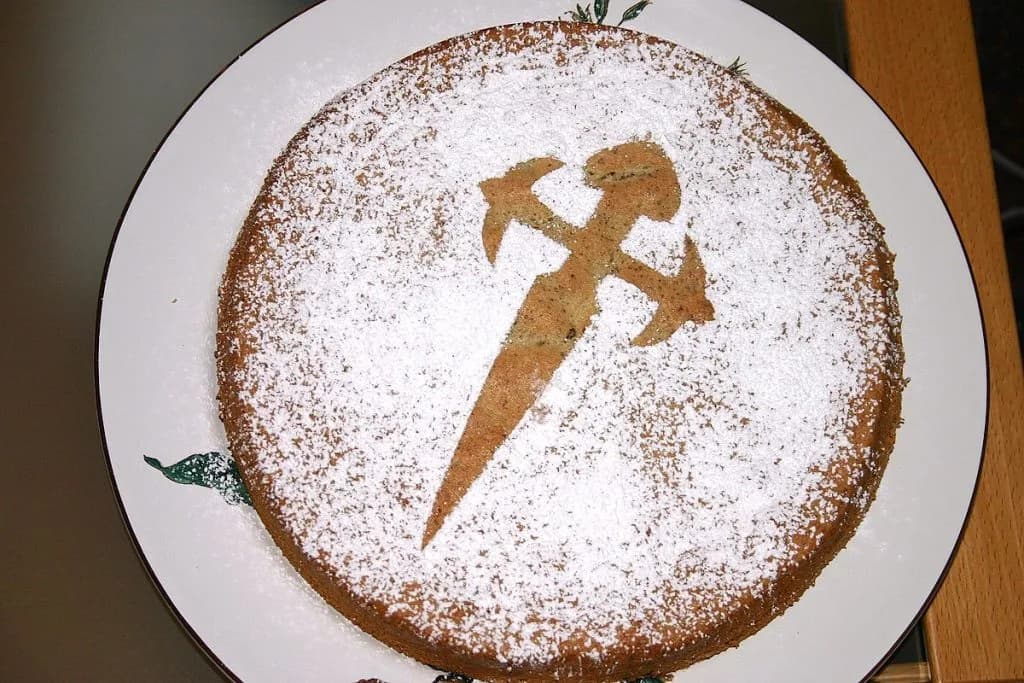
The dessert is an almond cake or pie that is slightly sweet with hints of citrus and a moist, spongy texture. It primarily consists of ground almonds (almond flour), eggs, sugar, and lemon zest. Typically, the cake has a round shape and can be made with or without a pastry base. The top is decorated with powdered sugar, featuring a stencil of the Cruz de Santiago (Cross of Saint James), which is a religious symbol of the region.
In this article, we’ll tell you everything about this traditional cake—all about its name, its ancient history, its iconic cross, and more!
Tarta de Santiago History: The Spanish Dessert with Medieval Roots
Tarta de Santiago has its origins in the Middle Ages, specifically in the region of Galicia, Spain. The earliest known reference to an almond cake resembling the Tarta de Santiago appears in 1577, when a “torta real” (royal cake) was consumed in a meal served at the University of Santiago de Compostela. However, the first reliable recipe resembling today’s Tarta de Santiago was recorded by Luis Bartolomé de Leybar, a confectioner from the region, in 1838.
Initially, the dessert was a luxury item enjoyed by the wealthy and religious elites due to the high cost of almonds and sugar, as they were cultivated in Spain’s Levante region (modern-day Valencia and Murcia) and had to be transported across the country.
Nevertheless, during the 17th and 18th centuries, trade expanded and almond cultivation increased, allowing the cake to become more accessible. By the 19th century, it was commonly known as torta de almendra (almond cake), and recipes were passed down through generations.
The modern name, Tarta de Santiago, became widely used after 1924, when the Casa Mora bakery in Santiago de Compostela began decorating it with the Cruz de Santiago using a powdered sugar stencil. This design became completely iconic and is now a defining feature of the cake, which helped solidify its identity as the region’s signature dessert.
A Certified Original Recipe
In 2010, Tarta de Santiago received Protected Geographical Indication (PGI) status from the EU. This is a European Union quality label that protects the name of a product that comes from a specific region and has at least one stage of production (processing, preparation, or manufacture) linked to that place. This helps preserve the region’s culinary heritage, protects the authenticity of the product, and guarantees quality for consumers.
For Tarta de Santiago, PGI status ensures that the cake follows the traditional Galician recipe, using at least 33% almonds, along with sugar, eggs, and lemon zest, without any added flour.
The Cake’s Iconic Feature: Origins of the Cross of Saint James
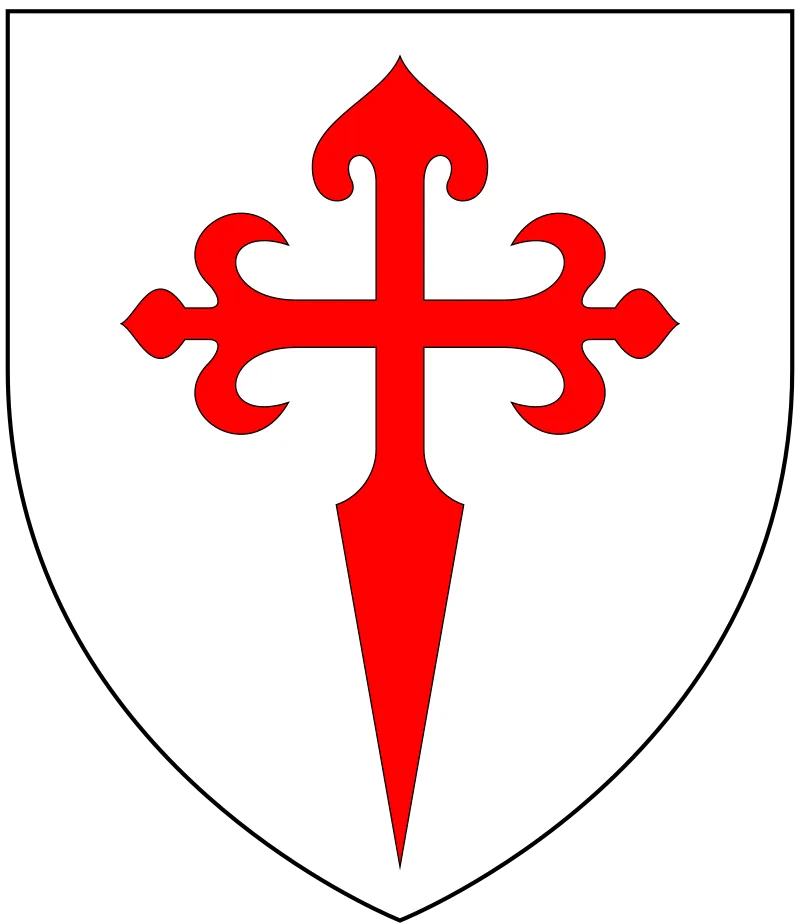
The Cruz de Santiago is an emblem associated with Saint James the Greater, one of Jesus’ apostles and the patron saint of Spain. Its design resembles a cross with a sword-like shape, featuring flared arms and a pointed lower end. This sword-like appearance (symbolizing martyrdom) reflects Saint James’ connection to knighthood and the Reconquista, the centuries-long Christian effort to reclaim the Iberian Peninsula from Moorish rule.
Legend has it that Saint James miraculously appeared as a warrior on horseback, leading Christian forces to victory at the Battle of Clavijo (844 AD). This earned him the title “Santiago Matamoros” (Saint James the Moor-Slayer) and solidified his role as a military and religious figure in Spain.
During the Middle Ages, the Order of Santiago, a religious and military order that protected pilgrims along the Camino de Santiago, adopted the cross as its emblem. Knights of the order defended Christian territories wearing this cross on their cloaks and armor. Thus, the Cruz de Santiago became a symbol of pilgrimage, faith, and Spanish heritage.
Today, the Cruz de Santiago is an official symbol of the Camino de Santiago, the famous pilgrimage route leading to the Cathedral of Santiago de Compostela. And pilgrims traveling to the cathedral (which is believed to house the remains of Saint James) often enjoy Tarta de Santiago as part of the tradition.
The Spanish Almond Cake Bearing the Cross of a Saint
Around the world, certain cakes are known for their distinctive designs, such as the Egyptian Ankh Cake, the Asian Lotus Flower Cake, or the Jewish Star of David Cake. Yet, the round-shaped Tarta de Santiago, always adorned with the Cross of Saint James, remains truly unique.
Today, it’s not only a cherished part of Galician culture but is also gaining recognition beyond Spain—Some bakeries are now incorporating this historic cake into their international offerings, as its use of almond flour instead of wheat makes it naturally gluten-free.
A symbol of faith, tradition, and wonderful flavor, Tarta de Santiago continues to leave its mark wherever it is.